Chartered Institute
of Linguists

CIOL Online Conference 2026


Date: Thursday 30 April 2026

Time: from 9.50am (welcome) - 3.40pm 

Location: Online via GoTo Webinar


Confirmed Speakers
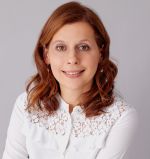

Anna Rioland - More than words: How wellbeing drives adult language learning


Why do adults decide to learn a new language and what helps them stay motivated when life is already full of responsibilities? This presentation explores the powerful connection between language learning and wellbeing, showing how emotions, confidence, and a sense of belonging play just as important a role as grammar and vocabulary. Drawing on real experiences from the classroom, as well as insights from Positive Psychology, we will look at how adult learners flourish when their core needs for autonomy, competence, and social connection are supported.

Anna will share practical, easy-to-apply strategies for creating enjoyable, low-anxiety lessons that build confidence and help learners experience moments of flow and achievement. The presentation will also explore how cultural engagement, curiosity, and supportive communities enrich the learning journey both for students and teachers.

By the end, attendees will leave with new perspectives and ready-to-use techniques for making adult language learning a more motivating, meaningful, and joyful experience for everyone involved.

Anna Rioland is a Chartered Linguist specialising in adult language learning, translation and language-related AI projects with over 15 years’ experience teaching German, French and Russian, currently teaching at City Lit (London). She has designed and delivered specialist courses in translation, literature and German history, and also works extensively as an examiner and exam text author. Alongside her teaching career, she runs a translation and localisation business, Meridian Translations, and contributes to AI language projects as a creative linguist, editor and evaluator. Passionate about languages and teaching, she is committed to supporting learners’ confidence, wellbeing and progression. Her qualifications include the Dip.Trans., MCIL, an MA in Translation from Heidelberg University, a Master’s degree from ESCP, and the CELTA teaching qualification.

Morag Neath - Interpreting for the EU


Morag Neath will provide an overview of trends in interpretation at the European Commission. She will address the recruitment needs, the profile being sought and the recruitment process. She will also touch on the current challenges facing the conference interpreting profession. Crucially, Morag will clarify a common misconception: while staff positions require EU nationality, around 50% of interpreting work at the Commission is carried out by freelancers and there are no nationality restrictions for freelance accreditation. The EU institutions actively recruit interpreters from the UK, the US, South Africa and beyond. With ongoing outreach efforts to maintain strong links with interpreters with English, this session offers essential guidance for anyone considering a career interpreting for the EU. 

Morag graduated from Bath University with a BA Hons in European Studies with French and Italian in 1994 and the following year completed the Postgraduate in Interpreting and Translation. She began her professional career as a staff interpreter at the Schengen Secretariat in 1996 and joined the English booth at DG SCIC, at the European Commission, in 1999 where she has worked ever since. She has added Portuguese, Dutch and Spanish to her language combination. After 5 years as Deputy Head of Unit, she was appointed Head of the English and Irish Interpretation Unit in January 2022.


Martín Chamorro - AI for Translators: Where Are We Now?


The world of AI and large language models (LLMs) continues to evolve at a remarkable pace, and translators face a challenging market but also new opportunities with these tools. In this session, Martín Chamorro will explore the current state of generative AI tools and their practical applications for translation professionals. He will share insights from his own ongoing experimentation, highlight emerging best practices, and examine capabilities that have transformed workflows over the past year.

Martín will also reflect on how attitudes within the profession have shifted, from initial apprehension towards a more strategic embrace of AI as a resource. In a follow-up to his hugely popular webinar on AI from April 2025, Martín will offer a timely opportunity to refine your understanding and develop a more structured, purposeful approach to integrating LLMs into your daily work.

Martín Chamorro MCIL is a self-confessed 'AI nerd', a facilitator, translator and reviewer based in Buenos Aires. He describes himself as largely self-taught, curious, practical and communicative, and with languages, AI and numbers at the top of his intellectual interests. He is a Board Member of his Translators’ Association (AATI), an ATA and CIOL member, and collaborates with different translators' organisations and universities.


Danny Bate -  How did English spelling end up like this?


The English language’s system of spelling, despite being increasingly present across the globe, does not enjoy a positive reputation. One of the modern world’s major languages is sharing vocabulary like debt, knee, salmon and receipt with more people than ever before, and then telling them not to pronounce the letters B, K, L and P! Written English’s many distinctive characteristics – such as letters each representing numerous sounds, letters representing no sound, and duos and trios of letters working together to represent a single sound – frustrate native readers and adult learners alike, and they seem a grievous departure from the principle of ‘one letter for one sound’. But how did we end up here?

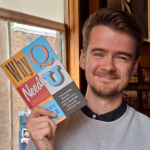
Dr Danny Bate, linguist and author of the book Why Q Needs U, offers a journey into English spelling that will illuminate these tricky aspects of the system of writing you’re reading right now. Combining linguistic and historical research with an accessible style, he examines the engine of spelling, identifying in particular two broad themes that can explain so much: the distinctive history of English speech, and the distinctive history of English speakers. Awareness of both shines a favourable light on our spelling today; it is far from graphic anarchy. Rather, it is an ancient testament to linguistic innovation and human ingenuity, which reflects the lives and language of the generations through whose hands it has passed.

Following a BA and MPhil, Danny studied for a PhD with the University of Edinburgh, graduating in 2024. His specialisms are historical languages, the Indo-European language family, and word order. Over the course of his time at university, he also pursued a passion for public linguistics – sharing the field with a general audience, through text, audio and video. This vocation has most recently expressed itself through Why Q Needs U, a new book about the alphabet and the English language, endorsed by Stephen Fry, Susie Dent, The Sunday Times and The Economist. Danny also runs the linguistic podcast ‘A Language I Love Is…’, and worked for a year as a radio presenter in the Czech Republic.


Gabriella Ferenczi - Positioning for the future: How linguists can market their unique value today


Freelance linguistic work is undergoing profound change. With AI reshaping workflows and client expectations, many linguists feel uncertain about how to sustain their careers or differentiate their expertise. This session explores practical, realistic ways to adapt - without needing to become a full-time marketer or chase every new trend. We will look at modern, sustainable approaches to self-marketing that move beyond traditional “tips and tricks” and focus instead on what genuinely works today. Together, we’ll explore how to redefine your value through niche specialisation, reposition your services to highlight uniquely human strengths, and build resilience through collaboration, small partnerships, and micro-collectives. We will also touch on how to recognise when a freelance path no longer feels viable on a personal level - and how to pivot your skills into adjacent roles and careers where linguistic expertise remains in high demand. Rather than offering quick fixes, this talk provides a grounded perspective on how freelance linguists can move through a shifting profession with confidence, purpose, and a renewed sense of professional identity, while ensuring the right marketing principles and tools are in place to convert prospects into buyers, in 2026 and beyond.

Gabriella Ferenczi MCIL CL, CMktr MCIM FHEA is a German and Hungarian language coach. She lives in London, Uk, where she runs a boutique language training company called ProLingua Global, and works as a Lecturer in Marketing at Coventry University London. In late 2020, she launched Thrive Online, an online space with free marketing tips and tools for language professionals who don’t like tech. It’s a place where they can find practical guidance and step-by-step help to turn more online browsers into buyers. You can follow Gabriella on LinkedIn.

Gerard Lysaght - How to protect your most valuable asset: reputation management in a world of social media


Protecting our reputation is becoming more challenging for individual professionals and language service providers, due in no small part to the impact of social media. Professional reputations can be damaged in lots of other less dramatic ways, too, such as unexpected IT problems impacting services to clients.

This presentation is based on my extensive experience of working in public relations roles for multinational and multilingual companies, where crisis communications and reputational risk management were key parts of my job. It will highlight potential reputation risks for language professionals and show real-life examples of how to respond effectively in the event of a crisis situation. More importantly, it will share practical steps you can take to ensure that the reputation risk in your language business is reduced as much as possible.

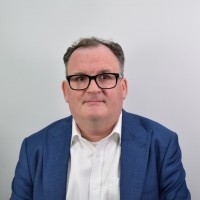
Gerard Lysaght provides English-language editing, proofreading and content creation services to clients across a range of industries.

Following an extensive career in journalism and corporate communications, he also trains and mentors the next generation of journalists through the English for Journalism Professionals course that he teaches as part of the BA degree programme in Journalism and Media Management at the University for Applied Science in Vienna (FH Wien der WKW). Gerard holds an MA in Russian and French from Trinity College Dublin.

Ilenia Goffredo - Diversifying the language profession: adapting to new definitions of value


As the language industry evolves, diversification has become less of a buzzword and more of a strategic necessity. Shifting client expectations and changing definitions of value and market dynamics are leading linguists and language companies to rethink how and where they contribute.

Shaped by challenges faced across the translation industry, this talk explores how linguists and language companies can expand their roles beyond traditional translation without abandoning linguistic rigour. It examines practical diversification pathways, from specialisation and advisory work to services grounded in linguistic expertise that sit closer to clients’ strategic goals. The session reframes ‘diversification’ as a mindset shift: from delivering language as a product to applying language expertise as a strategic resource. Attendees will leave with pragmatic insights into how to diversify intentionally, protect their core expertise and remain relevant in a rapidly changing language landscape.

Ilenia Goffredo is the co-founder and Managing Director of LingBox, a London-based multilingual translation business supporting businesses and organisations with specialised language solutions. With over 15 years of experience in the translation industry, she is also a Chartered linguist and an active member of the Chartered Institute of Linguists (CIOL). A regular speaker at industry events, Ilenia contributes to strengthening professional standards and best practice within the translation industry. She holds a Master’s degree in Interpreting (Conference and PSI) and a Bachelor’s degree in Translation and Liaison Interpreting.


Early bird tickets now available via Eventbrite